

The Cartier Cheich was never really about money. You had to cross the desert — and win it twice — to get one. More than forty years later, that idea of exclusivity feels almost impossible.
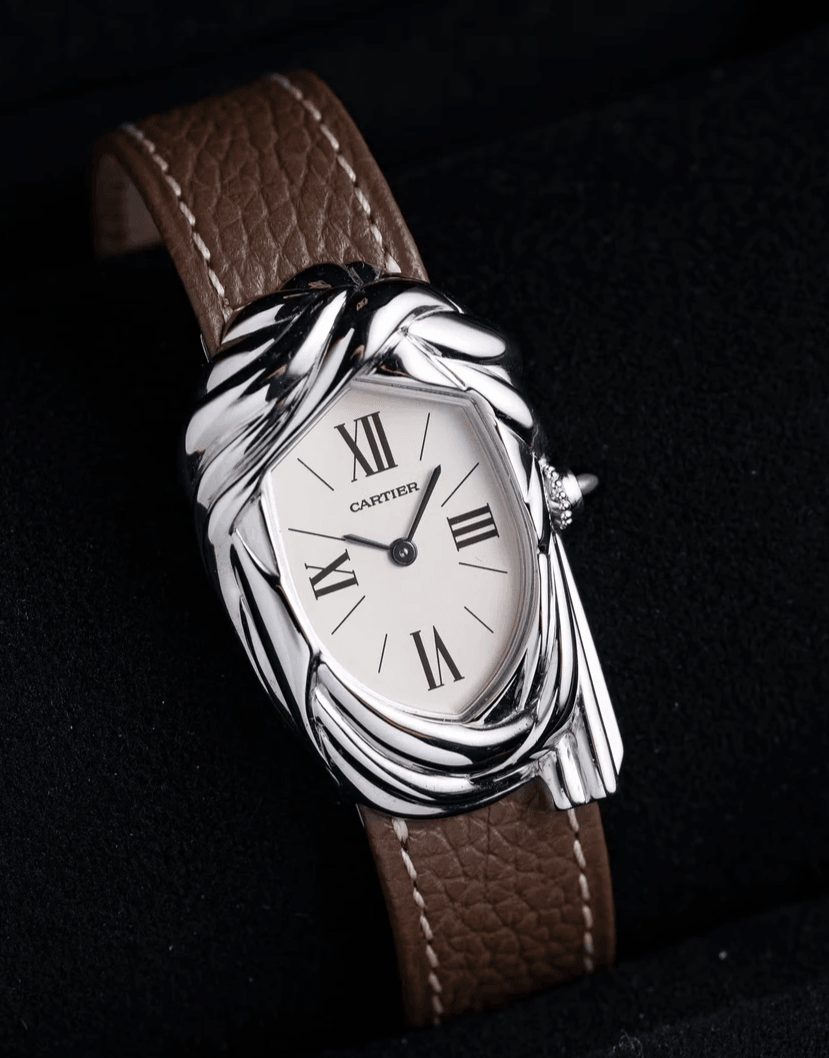
A Cartier just sold for $3.4 million at auction in Hong Kong. It is made of white gold, it is unique, and perhaps most surprisingly for a watch commanding that kind of money, it is powered by a quartz movement. Those ingredients alone would probably be enough to generate headlines. But after learning the story of the Cartier Cheich, I found myself caring much less about the movement — or even the price — than about something else entirely: the extraordinary way this watch originally had to be obtained.
Because there was a time when having enough money couldn't get you a Cheich. Neither could knowing the right dealer, building a purchase history or putting your name on a waiting list. You had to earn it.
A WATCH BORN IN THE DESERT
The story begins with the Paris-Dakar Rally, one of the most brutal motorsport events ever conceived. In 1983, Cartier's Alain-Dominique Perrin and Dakar founder Thierry Sabine created what became known as the Cartier Challenge. The idea was wonderfully simple and almost absurdly difficult: win the Paris-Dakar twice consecutively in the same category — motorcycle, car or truck — and Cartier would give you the trophy.
Except the trophy wasn't a cup, it was a Cartier.
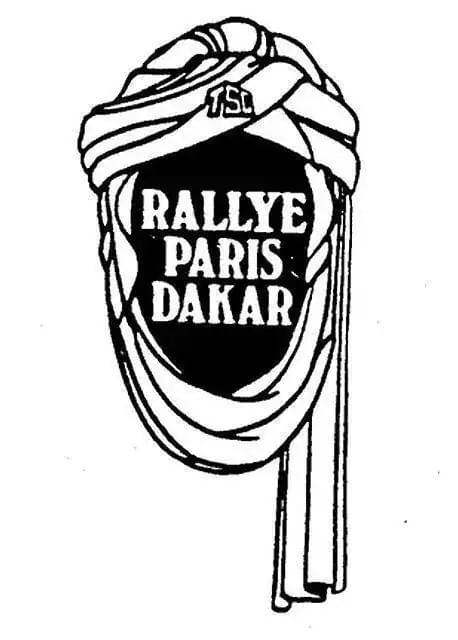
And not just an existing Cartier with a Dakar logo stamped somewhere on the dial. Cartier created something specifically for the challenge. Working with creative director Jacques Diltoer, the maison looked to the desert itself and to the Tuareg people who inhabited it. The distinctive tagelmust — the long veil and head covering traditionally worn by Tuareg men and known in French as a cheich — had already inspired the famous silhouette used by the Paris-Dakar. Cartier transformed those overlapping folds into the architecture of the watch itself. Once you see it, you cannot unsee it.
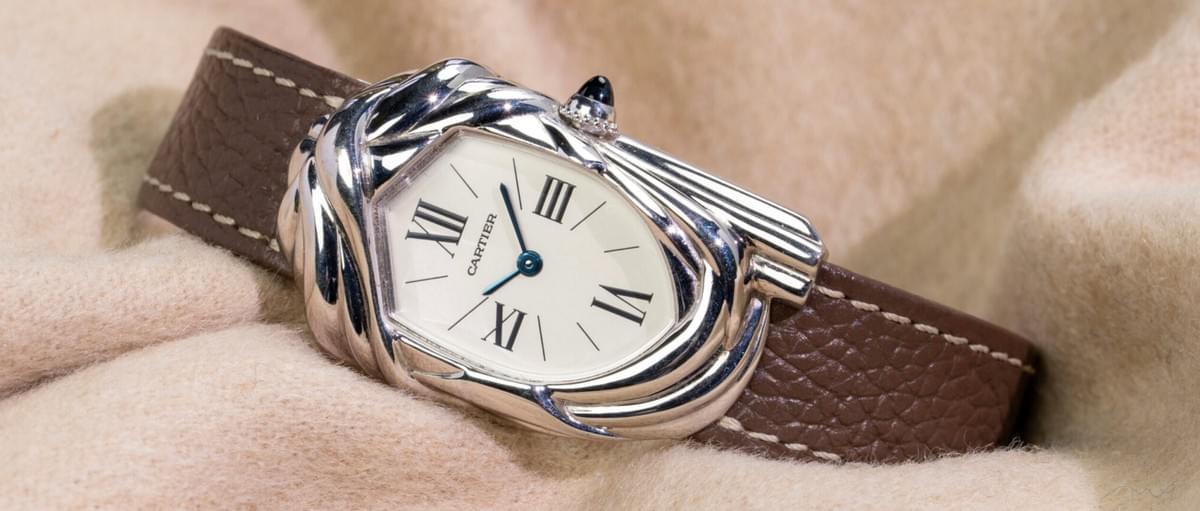
The case seems to wrap around the dial like layers of fabric. Precious metal behaves almost as if it were cloth, folding over itself in a form that feels simultaneously strange, luxurious and completely Cartier. The original trophy watches used Cartier's trois ors, combining different colors of gold, making the layers even more apparent.
That is one of the things I love most about the Cheich. Its unusual shape isn't there simply because Cartier wanted to make something unusual. The story created the design. And then somebody actually managed to win one.
GASTON RAHIER DIDN'T BUY HIS CARTIER
Belgian motorcycle racer Gaston Rahier won the Paris-Dakar in 1984 aboard a BMW and returned the following year to do it again. The second victory is the one that matters to our story.
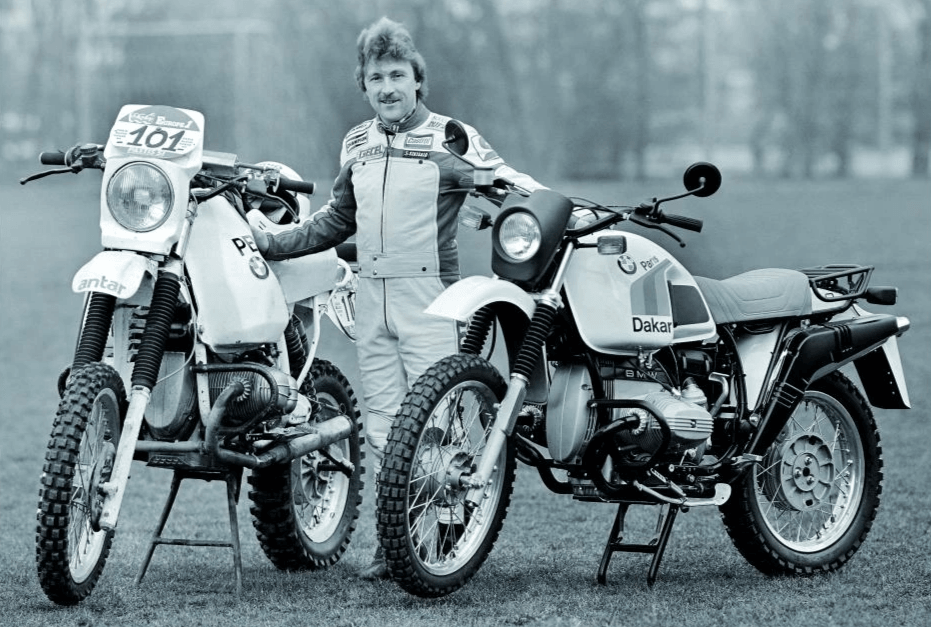
The 1985 Dakar stretched approximately 14,000 kilometers, and of the 552 competitors who started, only 146 finished. Rahier himself later described it as the most difficult edition he had experienced, with its enormous distance and severe sandstorms. When he crossed the finish line for the second consecutive year, he didn't merely become a two-time Dakar winner. He had completed the Cartier Challenge and Cartier gave him the Cheich.
I keep coming back to that because there is something almost wonderfully irrational about it from today's perspective.
Rahier wasn't being given access to purchase the watch. He wasn't moved to the top of a client list. He didn't need to demonstrate a history of buying other Cartier pieces first he won it.
The watch was the physical evidence of something he had accomplished and that distinction matters.
YOU COULDN'T BUY IT
Modern watch collecting has developed a very peculiar definition of exclusivity.
Sometimes exclusivity means production numbers. Sometimes it means price. Sometimes it means waiting years for an allocation, developing a relationship with an authorized dealer or demonstrating that you are an important enough client to be offered something other people cannot get.
There is nothing inherently wrong with any of that. Rare objects have always created competition among collectors but scarcity and achievement are not the same thing.
The Cartier Challenge proposed something radically different: your ability determined whether you could own the watch.
Money wasn't enough. Connections weren't enough. Wanting one desperately wasn't enough. You had to accomplish something that almost nobody else on Earth could accomplish. That changes the meaning of the object.
We live in a world where wealth can provide access to almost anything. Enough money can put extraordinary cars, art, watches and experiences within reach. But money alone does not necessarily bring taste, knowledge or achievement with it. The Cheich represented another kind of luxury — one in which possession told you something about the person wearing it.
If you saw that Cartier on Gaston Rahier's wrist, you already knew the story, he had crossed the desert and he had won twice.
THE ONLY MAN WHO EVER DID IT
The Cartier Challenge didn't last long enough to produce another winner.
Thierry Sabine died in a helicopter crash during the 1986 Dakar. The Challenge disappeared with him, leaving Rahier as its only recipient. Four Cheich watches were produced during the original period: the men's and women's trophies, another prepared for a future winner, and one created for Sabine himself. Sotheby's says Sabine's watch is now unaccounted for, while two of the others remain in the Cartier Collection.
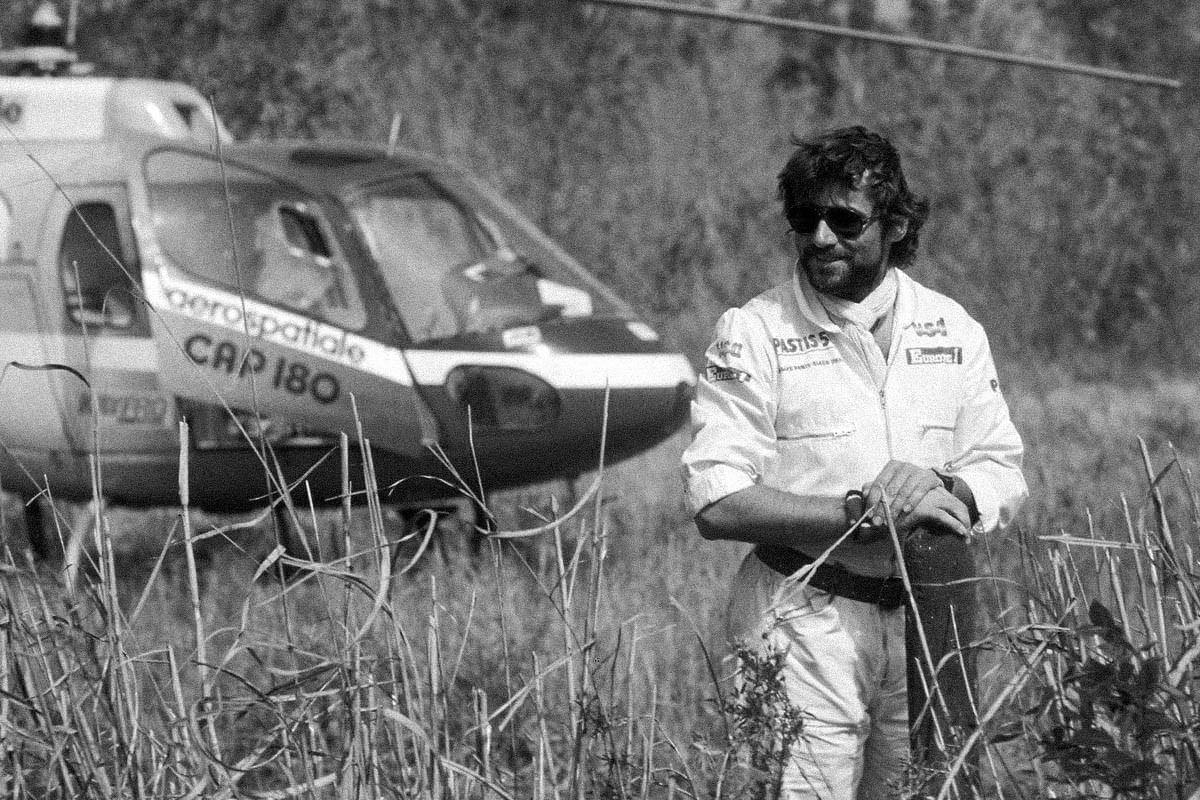
Rahier's watch remained with his family until 2022, when Sotheby's sold it for more than €1 million. That should have been almost the end of the Cheich story, almost because decades later, Cartier made one more.
THE FIFTH CHEICH
Giorgio Seragnoli wasn't a Dakar winner. He was something entirely different: one of the world's most important collectors of white-metal Cartier watches and later co-author of Cartier Bianco.
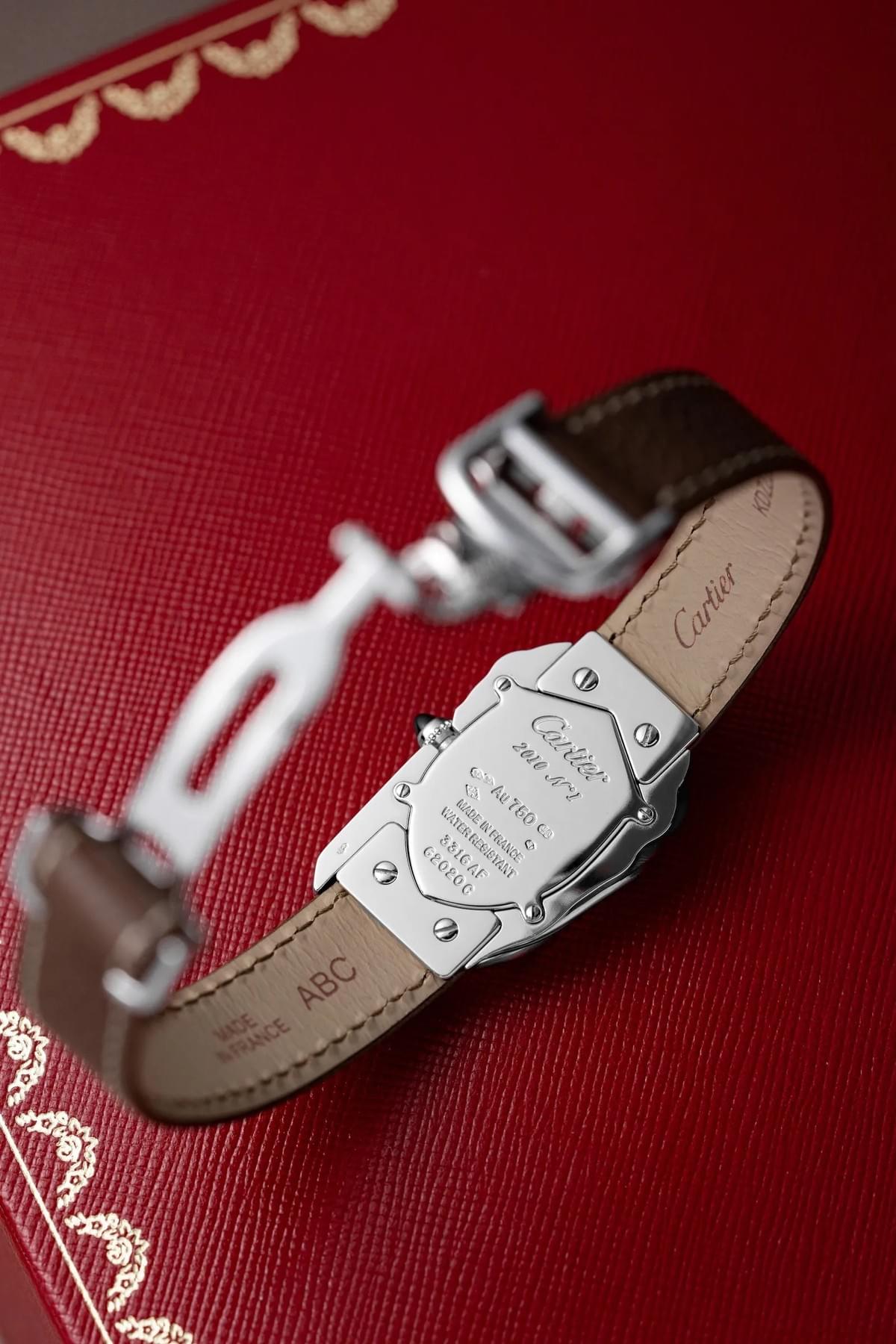
And somehow, he persuaded Cartier to do something extraordinary.
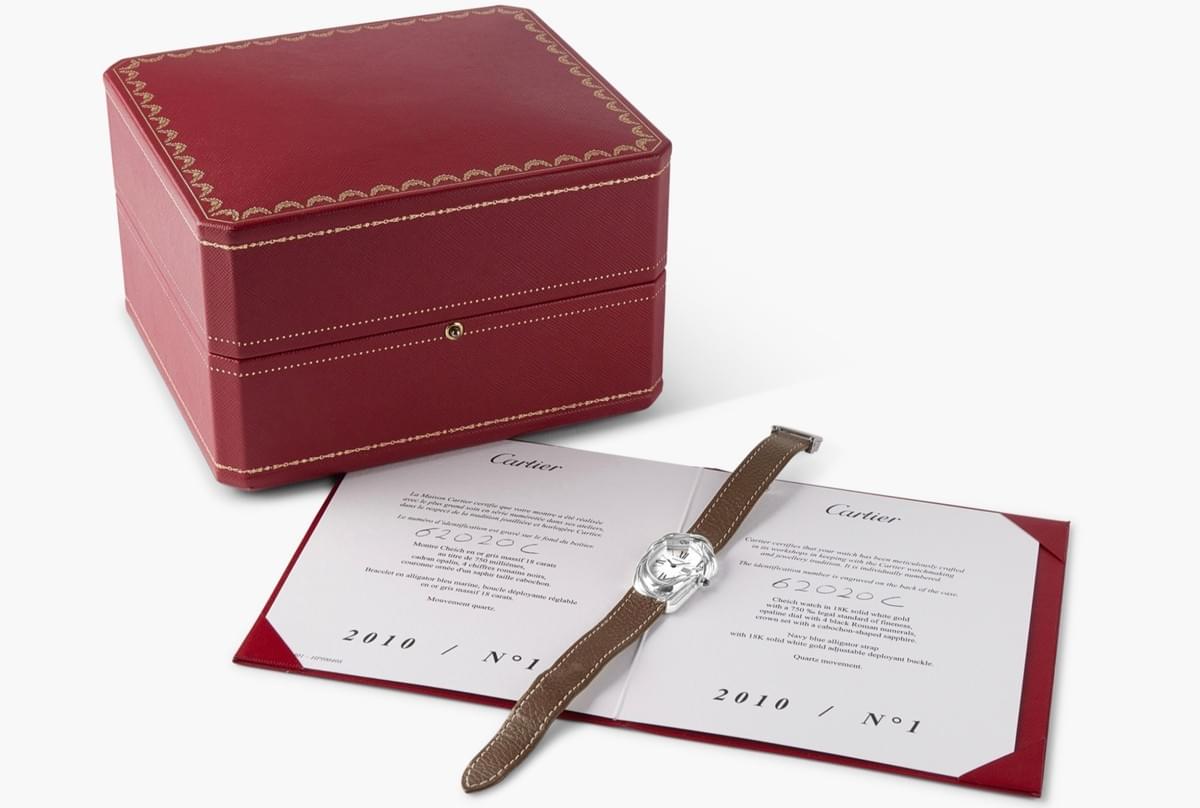
Around 2010, Cartier created a Cheich specifically for him — this time entirely in white gold, numbered 1/1. Sotheby's describes it as the fifth Cheich and an exceptional special commission that Cartier would not repeat.
This is the watch that appeared at Sotheby's Hong Kong in September 2026.
There is an interesting irony here. The original Cheich represented an object that money couldn't buy. The fifth exists precisely because an extraordinary collector relationship opened a door that was otherwise closed.
And now that same watch has entered the third chapter of the story.
THE AUCTION ROOM
It sold for approximately $3.4 million, making it the most expensive Cartier wristwatch ever sold at auction, which brings us back to the uncomfortable question. What exactly did somebody just pay $3.4 million for?
It certainly wasn't the movement. The watch is quartz, it wasn't simply the quantity of precious metal either.
The buyer purchased rarity, design, provenance and access to one of the strangest chapters in Cartier's history. Most importantly, perhaps, they purchased something whose original meaning was built around the idea that it couldn't simply be purchased.
And strangely, I don't find the price offensive. I almost find it appropriate.
THERE WAS NO DESERT LEFT TO CROSS
The person who bought this Cheich in 2026 couldn't enter the Cartier Challenge.
There is no application to fill out. No Dakar victory that will unlock another example. No dealer relationship capable of reproducing what happened in 1985. The competition disappeared four decades ago, its creator is gone, and Gaston Rahier remains the only person who ever earned the trophy the way it was intended to be earned.
The opportunity itself has become extinct. There was no desert left to cross. So perhaps money became the final obstacle.
And $3.4 million is one hell of an obstacle.
Yet after spending time with this story, I don't think the auction result is what makes the Cartier Cheich extraordinary. In fact, it may be the least interesting part of it.
What fascinates me is the idea behind the original watch, a luxury object that couldn't be bought, a trophy you could actually wear.
A Cartier that said something about what its owner had done, rather than simply what its owner could afford.
Maybe that idea feels particularly powerful today because modern luxury has become so good at manufacturing exclusivity. Limited editions, allocations, waiting lists and private-client access can all make an object difficult to obtain. But the Cheich reminds us that there was once another possibility. Make the object difficult to deserve, that is a completely different kind of exclusivity.
And perhaps that is why, more than forty years later, somebody was willing to pay $3.4 million for the privilege of owning what Gaston Rahier once had to cross a desert twice to earn.
— Mauricio Venegas
Founder & Editor, RAW TIME