

At some point, the desire to own a watch becomes confused with the desire to appear as someone else.
And that confusion comes at a cost far greater than money.
In life, we reach milestones. We achieve goals. And sometimes, we choose objects that help us mark those moments — not out of vanity alone, but as symbols of effort, discipline, and personal growth.
In watchmaking, this is especially true. A watch is rarely just a tool to tell time; it is often tied to aspiration, identity, and pride. Yet in recent years, a growing number of people choose a different path: replicas, fakes, and so-called “one-to-one” copies of watches they desire but do not own.
And the question worth asking is simple:
Why buy a replica to pretend to be something you are not?

I have encountered countless people who refer to replicas as “high-end watchmaking,” “the best of the best,” or even “better than the original.” These claims could not be further from reality. Replicas are not high-end. They are not horology. They are not craftsmanship. They are, at best, visual imitations — and at worst, symbols of self-devaluation.
When we wear something designed to deceive, we are not elevating ourselves. We are diminishing our own story by presenting an image disconnected from reality. And that is unnecessary — because true icons of watchmaking exist at every level, many of them entirely attainable and unquestionably original.
Even a Casio holds more value than any replica. And this is not a dismissal of Casio — quite the opposite. I consider Casio a top-tier brand within its field. Its value lies in honesty, purpose, and originality. Simply by being authentic, a Casio outweighs any fake Rolex, Patek, or Audemars Piguet.

Watch collecting is, at its core, a passion. And one of its most beautiful aspects is the hunt — the waiting, the saving, the discipline, the sacrifice. That journey is part of the reward. When the moment finally arrives and the watch is on your wrist, that sense of accomplishment cannot be replicated, borrowed, or faked.

Beyond personal integrity, supporting replicas also means participating — knowingly or not — in a darker ecosystem. One tied to exploitation, illegal labor, contraband, and practices that stand in direct opposition to the values many collectors claim to hold. Choosing authenticity is not only a personal decision; it is an ethical one.
There is nothing wrong with owning a watch at any level of the market. From Casio, Seiko, and Tissot, to Oris, Omega, Rolex, and beyond — what matters is not the brand, but the meaning behind the choice. An original watch carries a soul. A replica never does.
Ultimately, watchmaking is not about status. It is about connection. About history, mechanics, design, and emotion. About owning something real — something that can one day be passed on, with its story intact.
A watch can mark more than time. It can carry a love story, a shared journey, a challenge overcome, or a moment that changed everything. In that sense, a watch becomes a witness — not to trends, but to life itself.
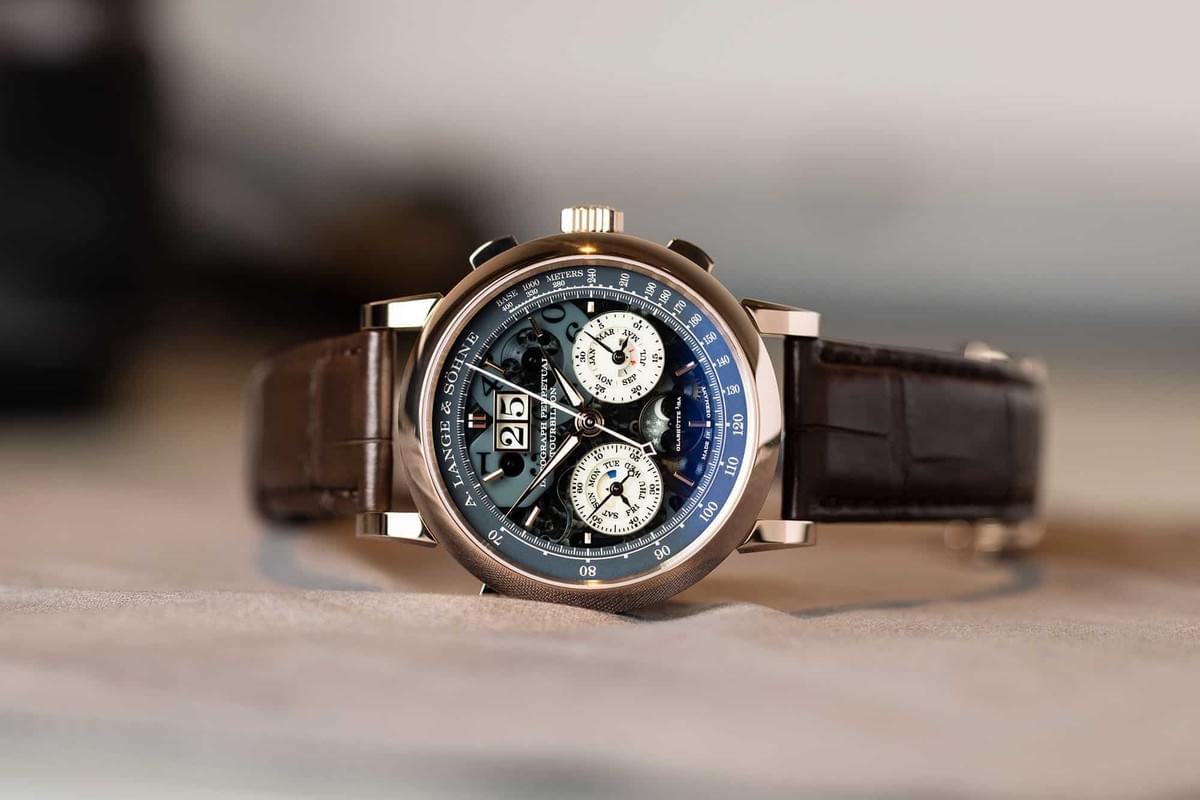
Because in the end, the most valuable thing a watch can represent is not what others see — but what you know it took to earn it.
— Mauricio Venegas
Founder & Editor, RAW TIME