

The Grönefeld 1941 Quadrivium is expensive, complicated and definitely not for everyone. But sometimes you have to stop talking about value and simply admire what mechanical watchmaking can do.
The new Grönefeld 1941 Quadrivium is definitely not a watch for everyone. At €280,000 in tantalum, price alone makes that obvious, and its highly technical, asymmetric design will probably divide people just as much.
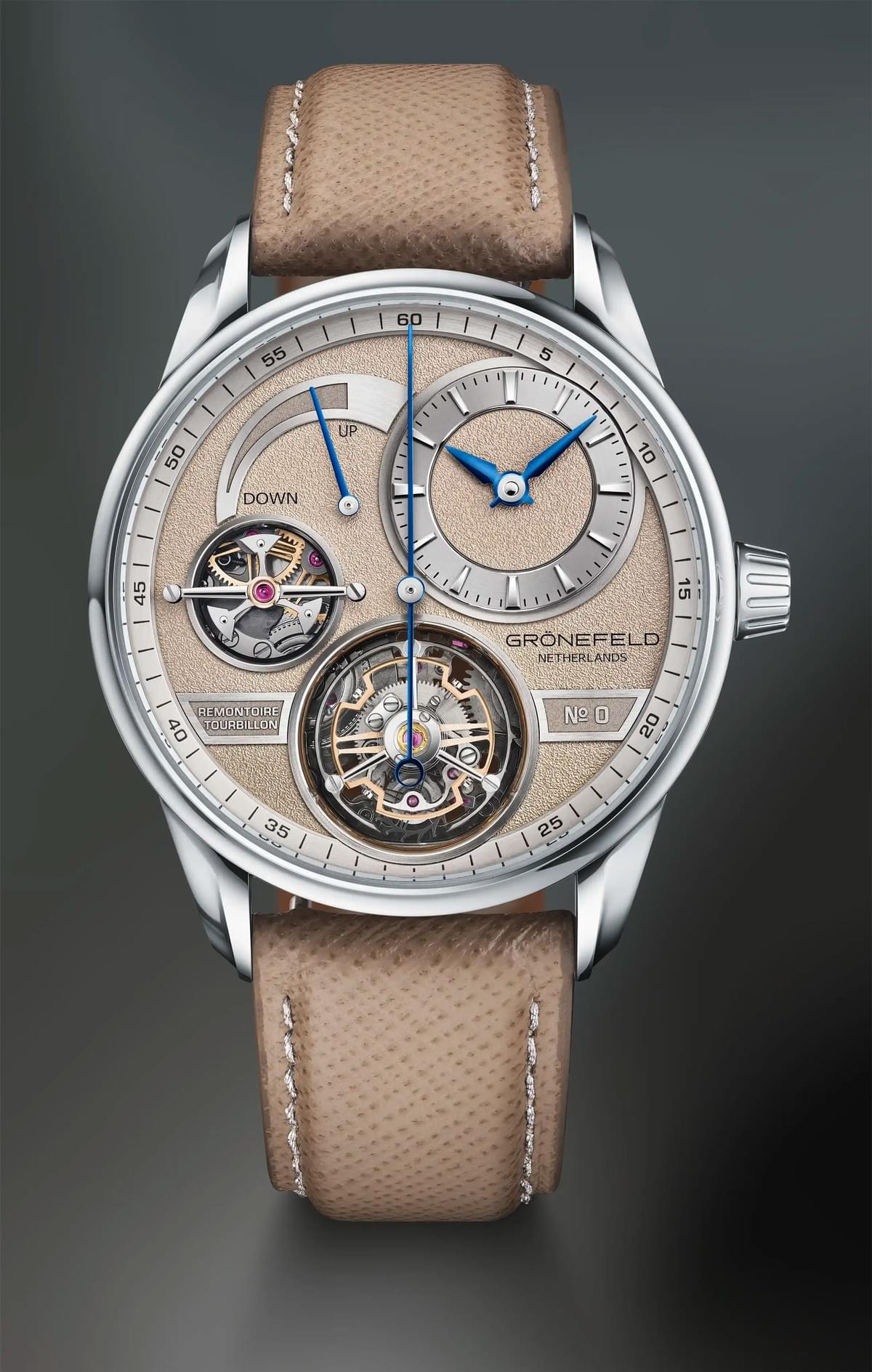
But there are watches where, at some point, you have to stop asking whether you would buy one and simply admire what has been created, for me, the Quadrivium is one of those watches.
Because underneath all that complexity is something genuinely beautiful: four complications brought together inside a single calibre, not as a demonstration of excess, but as a demonstration of mechanical watchmaking.
And the more I look at it, the more I think there is really only one expression for it:
Savoir-faire.
MECHANICAL THEATRE
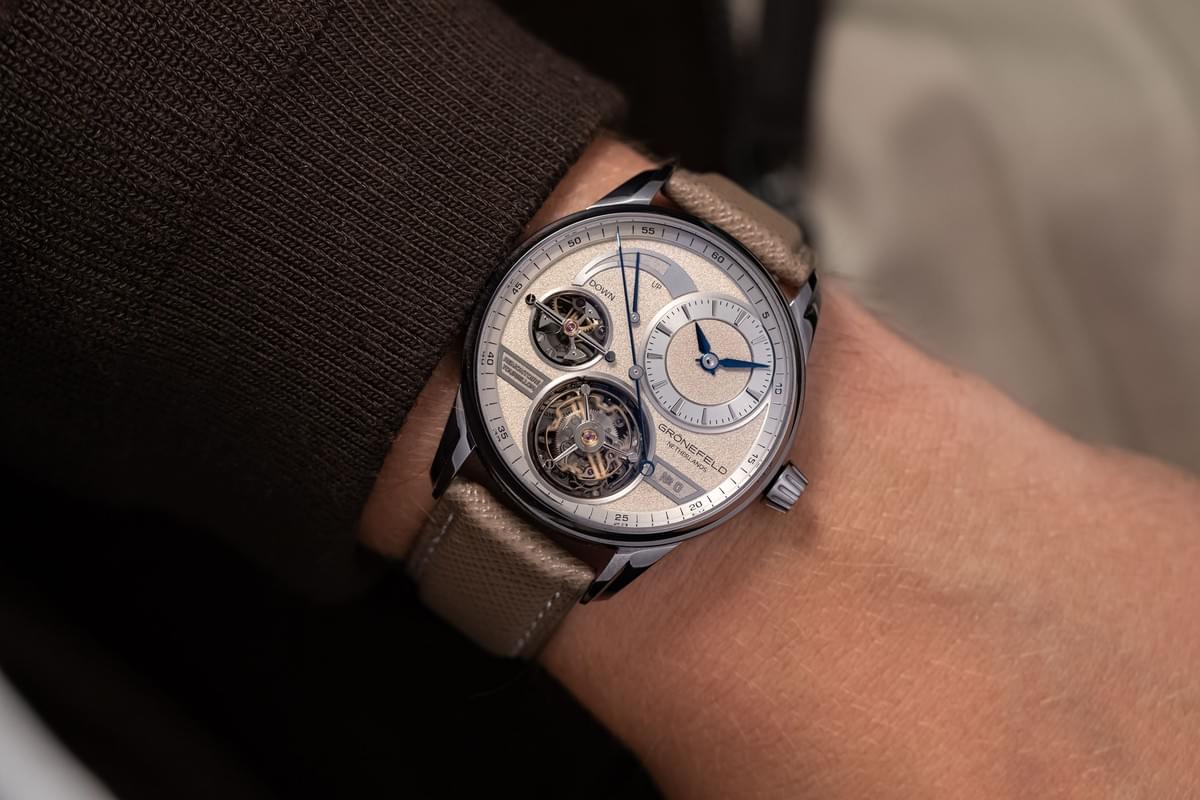
Look at the dial and there is almost too much happening, yet somehow it works.
At nine o'clock, the 7.5-second constant-force remontoire is completely exposed. At six, the one-minute flying tourbillon rotates underneath its polished bridge. Between them, there is this wonderful visual relationship — almost as if the two mechanisms were dancing with each other.
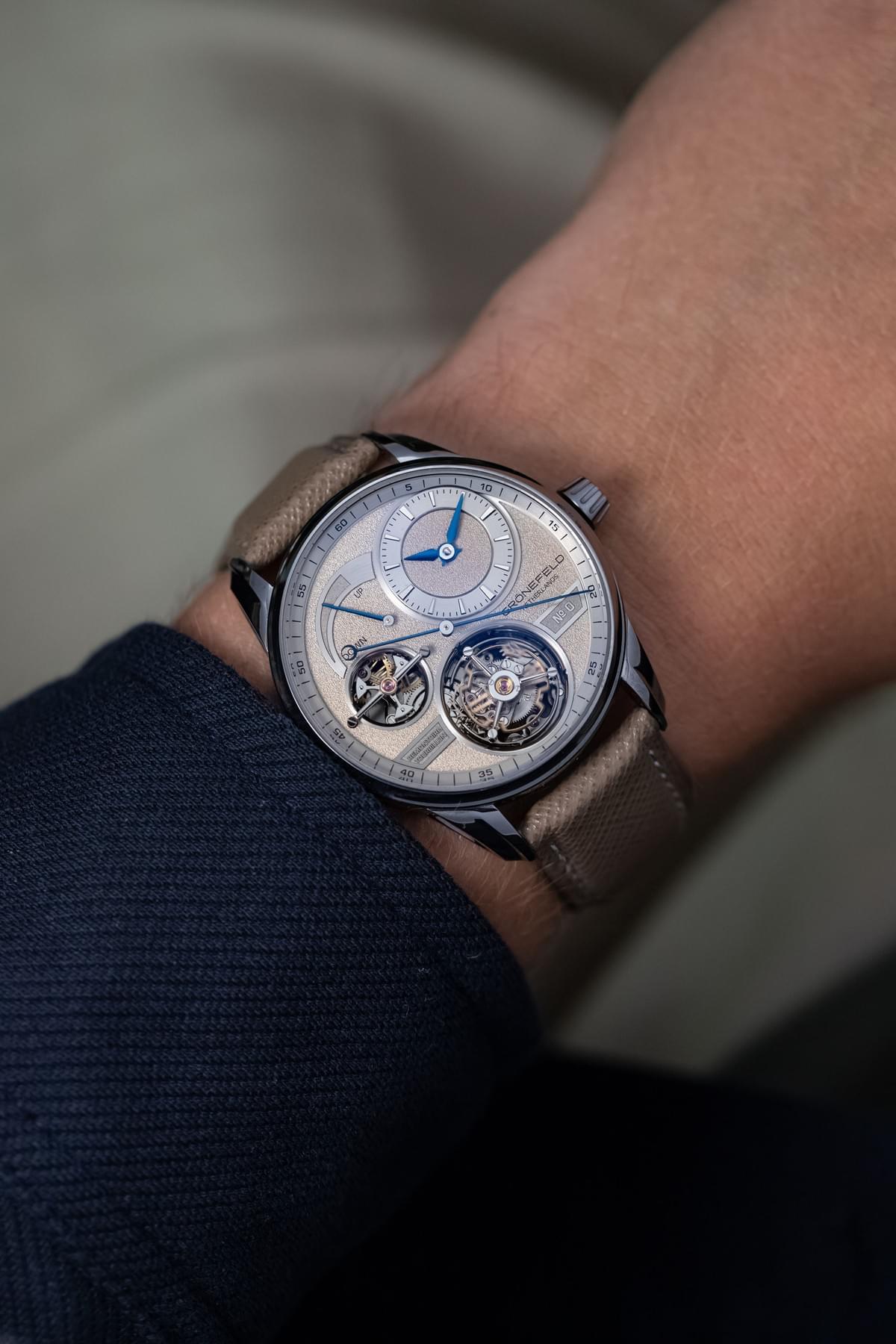
Then Grönefeld pushes the hours and minutes towards two o'clock and places the power reserve around ten, leaving the mechanics enough room to breathe without completely sacrificing the ability to actually read the time.
It should look chaotic. Instead, I find it remarkably harmonious.
And perhaps my favorite part is that these mechanisms aren't there simply because Grönefeld wanted to fill the dial with moving things.
The remontoire periodically receives energy from the mainspring and delivers it more consistently toward the regulating system, helping isolate the escapement from the gradually changing torque of the barrels. The tourbillon continuously changes the position of the escapement and balance. And the central deadbeat seconds gives us that wonderfully contradictory sight: an extraordinarily complicated mechanical watch whose seconds hand jumps once every second almost like a quartz watch.
All of this comes from the new manually wound G-09 calibre, comprising 473 components. That number alone doesn't impress me, what those components are doing together does.
TURN IT OVER
And then you look at the back. This may actually be where the Quadrivium becomes even more beautiful.
The architecture of the G-09 is spectacular. Wheels, barrels, bridges and levers don't appear to have simply been squeezed wherever engineering allowed them to fit. There is an obvious attempt to make the movement visually coherent.
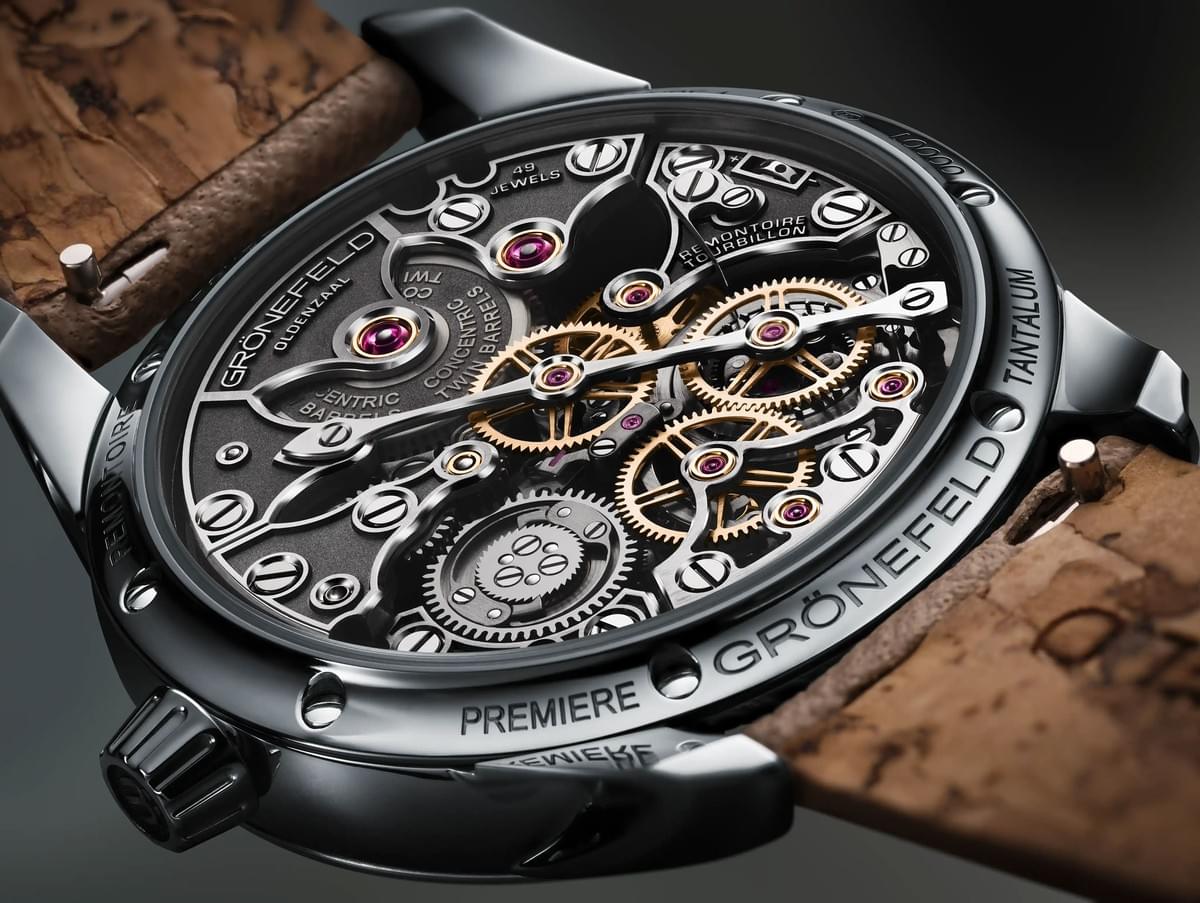
The two concentrically mounted barrels working in series provide approximately 50 hours of power while keeping the movement compact. The wheel train remains beautifully visible between the bridges, allowing you to visually follow part of the transmission of energy through the calibre rather than hiding everything underneath a giant plate.
Then come the details, Grönefeld's characteristic stainless-steel bridges are finished with hand-polished bevels and countersinks, straight graining across their upper surfaces and polished edges. Gold chatons frame several jewels. The wheels receive their own finishing, and even components most owners will probably never consciously notice have been treated as part of the composition.
And then there are those beautiful gold winding wheels shaped like the bell towers of the Basilica of St. Plechelmus in Oldenzaal, the Dutch hometown of Bart and Tim Grönefeld — a recurring signature of the brothers and a small reminder that this movement actually comes from somewhere.
That's the difference between complexity and craftsmanship, complexity can be counted, craftsmanship has to be seen.
40 MILLIMETRES
Perhaps the number that surprised me most isn't 473. It's 40.
The Quadrivium puts a flying tourbillon, constant-force remontoire, deadbeat seconds and power reserve inside a case measuring approximately 40 mm across and only 11.3 mm thick.
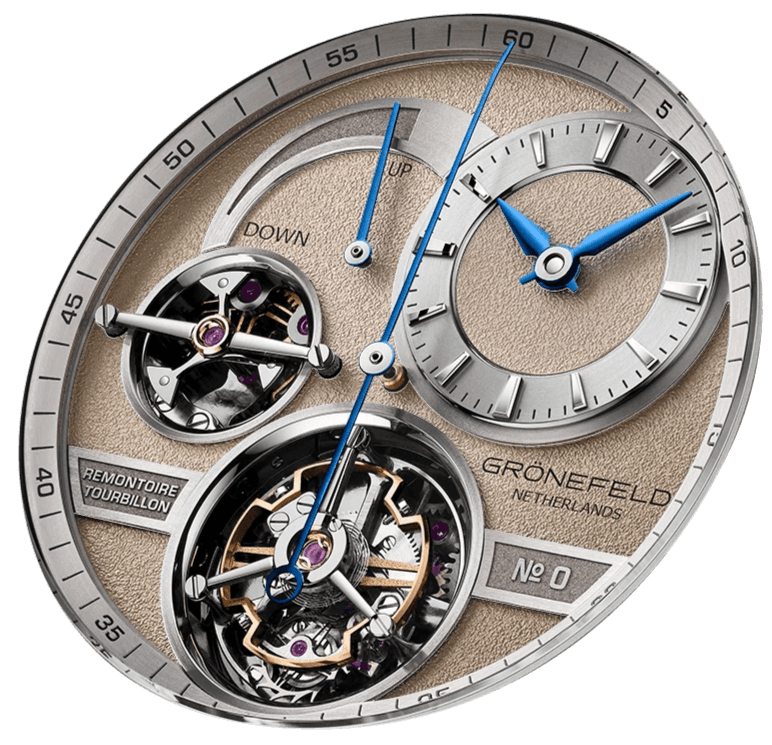
That matters. Because making something complicated is one thing. Making it complicated, visually theatrical and still wearable is another.
The Première Edition uses tantalum, an unusually dense, naturally blue-grey metal that is considerably more difficult to machine than conventional steel. Only 28 will be made, followed by another 28 pieces in platinum.
This is not subtle watchmaking. But it is remarkably controlled watchmaking.
THIS IS WHY MECHANICAL WATCHES EXIST
There is absolutely no rational need for any of this. A quartz watch can measure time more accurately. Your phone already knows the time. Nobody needs a tourbillon rotating beneath a hand-finished bridge while a remontoire releases energy every 7.5 seconds and a mechanical seconds hand deliberately jumps around the dial.
And yet that's precisely why I love it. The Quadrivium takes several beautiful solutions developed throughout mechanical watchmaking and brings them together simply because two watchmakers had the knowledge, patience and ambition to make them coexist.
Is it expensive? Absolutely. Is it for everyone? Not even close.
But look at that movement. Look at the remontoire and tourbillon dancing across the dial. Look at the bridges, the wheel train, the barrels, the winding wheels and the amount of traditional finishing packed into a case only 40 mm wide.
This isn't about telling the time better. It's about showing what can happen when telling the time becomes an art.
For the 28 people fortunate enough to put the tantalum Quadrivium on their wrists, I can only imagine the pleasure of turning it over, watching those mechanisms come alive and knowing that you're carrying a tiny mechanical world with you. A truly extraordinary watch.
This is savoir-faire.
— Mauricio Venegas
Founder & Editor, RAW TIME