

Many watchmakers try to be different. The problem is that being different is not particularly difficult; being different and having something meaningful to say is. Watchmaking is filled with unusual cases, exotic materials and theatrical complications designed to attract attention, but recognition and identity are not the same thing. Novelty can make us look once. Identity is what makes us recognize a watch years later, perhaps from across a room, without needing to see the name on the dial. De Bethune belongs to that much smaller group.
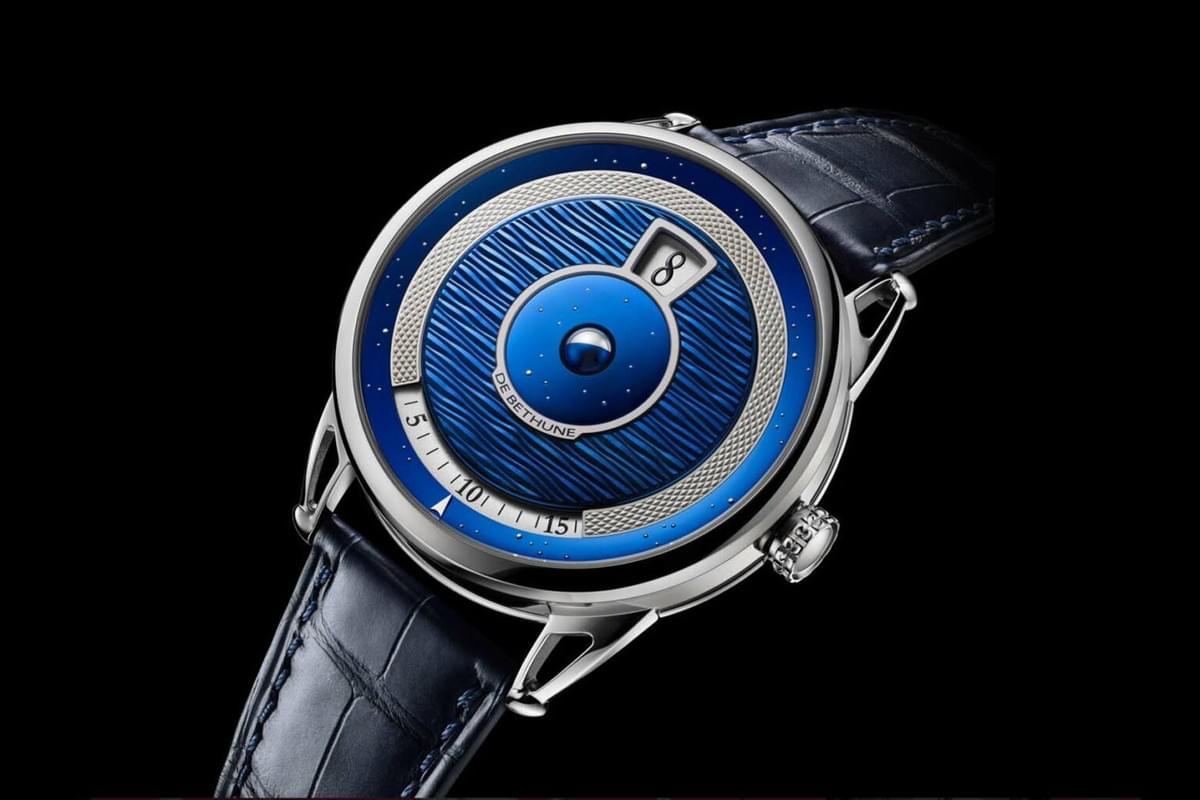
The new DB25 Digitale is a perfect example. There are no conventional hour and minute hands moving around a familiar dial. Instead, the hours jump through an aperture at 12 o'clock, the minutes travel around the perimeter on a rotating disc, and at the center sits De Bethune's unmistakable spherical moon, inclined at 60 degrees. It is certainly different, but never feels different simply for the sake of being different. It feels like De Bethune.
The Difficult Art of Being Different
The watch industry has become remarkably good at manufacturing novelty: another dial color, another material, another anniversary, another forgotten reference pulled from the archives. Building an identity requires something else. It demands repetition without becoming repetitive, consistency without becoming predictable, and enough conviction to develop ideas until they become a language.
The DB25 Digitale did not suddenly appear because De Bethune needed something unusual for 2026. It follows in the footsteps of the earlier DBD, while the spherical moon, heat-blued titanium, unconventional displays and almost futuristic mechanical architecture have been developing across the manufacture's work for years. These elements no longer feel like experiments. They have become a vocabulary, and the DB25 Digitale looks less like a manufacture searching for a personality than one completely comfortable with the personality it has already built.
Twenty Years Later
Perhaps that is why this particular watch brought back a memory I had not thought about in some time. I first encountered De Bethune almost twenty years ago, while I was still at university. I had the improbable idea of opening a boutique dedicated to unusual watch brands, long before independent watchmaking became the phenomenon it is today. With considerably more enthusiasm than experience, I wrote to De Bethune.
To my surprise, they answered. I still have the email. They knew little about my market, but were willing to explore the possibility of distribution under the right circumstances. Nothing came of it; I was young, inexperienced and lacked the capital to turn enthusiasm into a serious business. But I never forgot the exchange. More than the missed opportunity, what stayed with me was discovering that behind these extraordinary objects were real people willing to take seriously the enthusiasm of a young collector. Twenty years later, seeing what De Bethune has become makes me smile. I had briefly encountered a manufacture that was still in the process of becoming itself.
When Mechanics Become Poetry
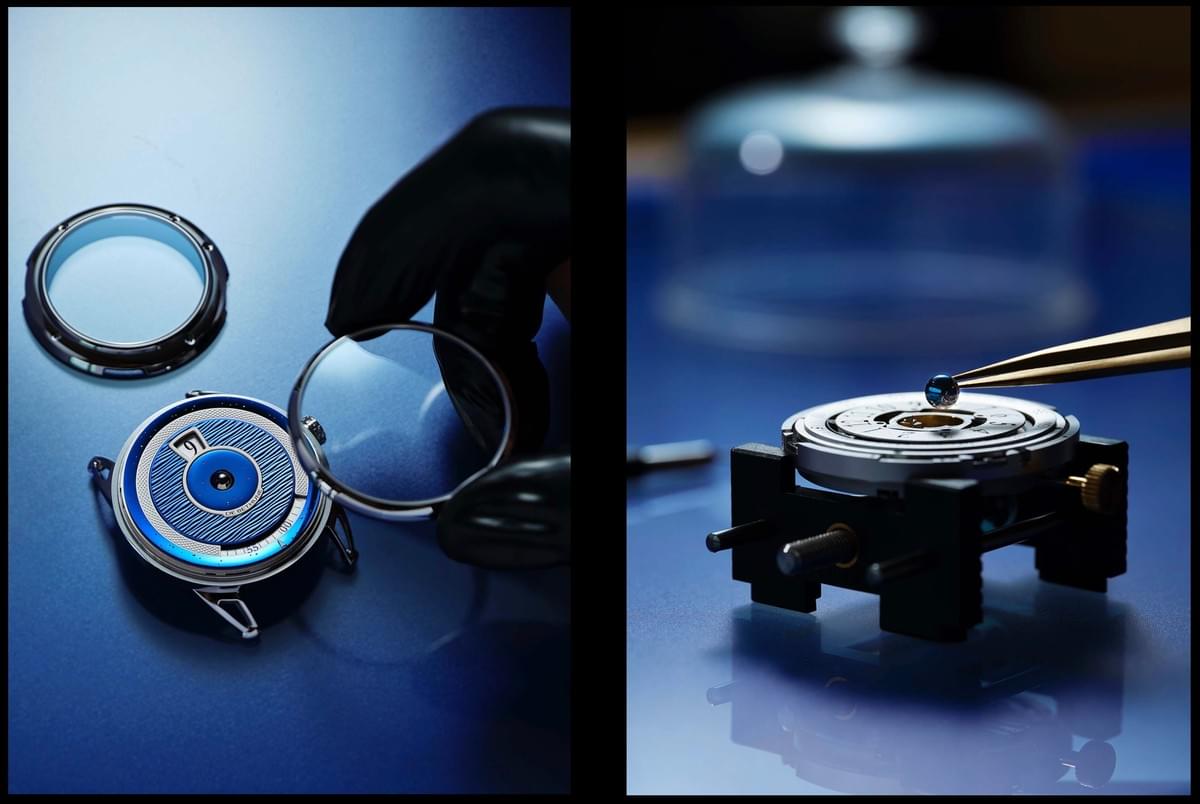
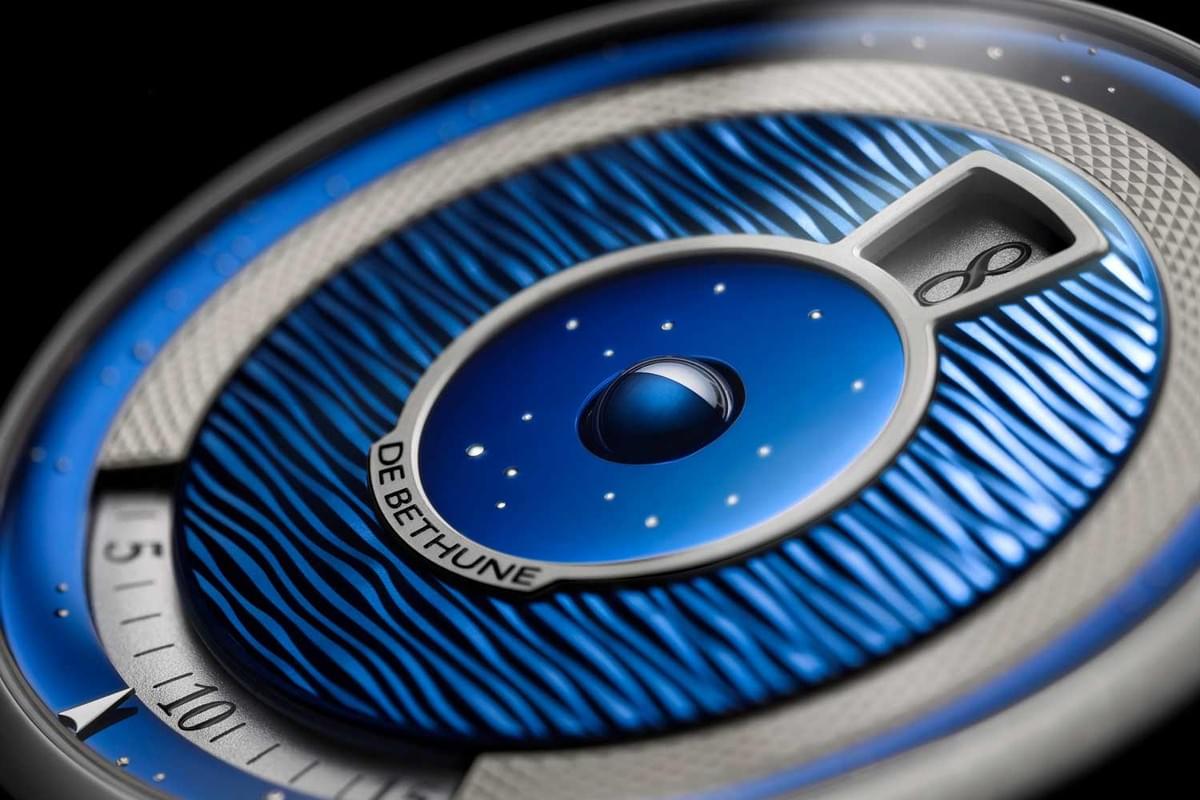
The DB25 Digitale shows just how far that identity has come. Its dial is constructed from 82 elements, combining blued titanium, random guilloché, a silvered hand-guilloché minute sector and grey-gold stars around that extraordinary spherical moon. De Bethune calculates the deviation of the moon phase at just one lunar day every 1,112 years. Nobody reading this article will ever experience that error. Neither will their children, grandchildren or many generations after them. And someone engineered it anyway.
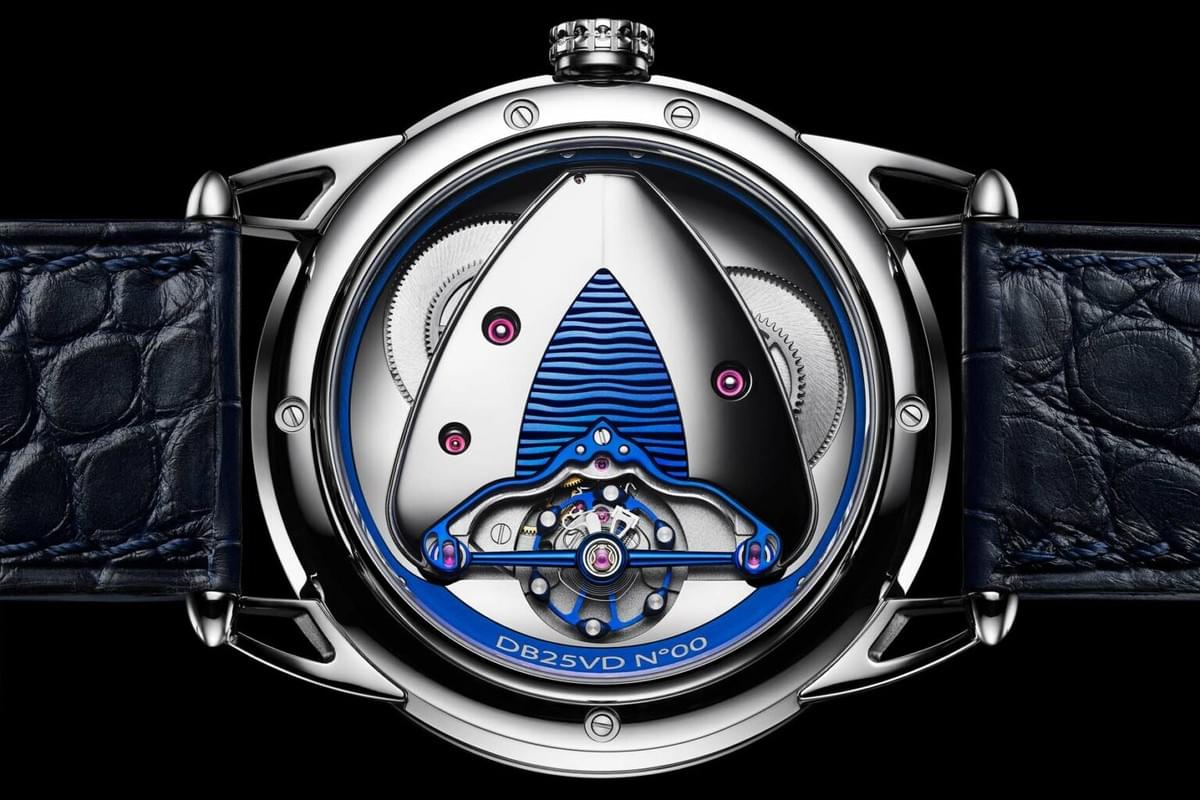
There is something beautiful about that kind of excess. At this level of watchmaking, precision can stop being a practical necessity and become an expression of intent. The manually wound manufacture DB2144V3 reinforces that idea with 416 components, five days of power reserve from twin self-regulating barrels, and De Bethune's characteristic combination of advanced materials and traditional finishing. The result isn't simply an elaborate way of telling us that it is 10:37. It is an attempt to make us notice that time is passing at all.
Identity Has to Be Earned
Admiration should not make the DB25 Digitale untouchable. At 42 mm, it remains substantial at a moment when high-end watchmaking has rediscovered more restrained proportions. Titanium and De Bethune's distinctive lugs should help on the wrist, but I would reserve judgment until actually wearing it. More interesting is another question: are we responding to the watch itself, or have we learned to admire certain ideas because the De Bethune name now carries considerable prestige?
Strip away that reputation and the design still works. The unusual display remains fascinating, the spherical moon still demands attention, and the combination of traditional guilloché with futuristic blue titanium feels coherent rather than theatrical. That may be De Bethune's greatest achievement. In little more than two decades, these elements have stopped looking like isolated experiments and become unmistakably its own.
That matters in an industry obsessed with heritage. Heritage can be inherited, archives reopened and historic references reproduced. Identity has to be earned. Somewhere in my inbox there is still an email from almost twenty years ago, written when De Bethune was still establishing its place in the watch world and I was young enough to believe enthusiasm might be sufficient qualification to become a watch distributor. It wasn't, but I am glad I sent it. Looking at the DB25 Digitale today reminds me how long genuine identity takes to build. De Bethune no longer needs to tell us who it is; you can see it in the watch. Perhaps that is the difference between trying to be different and actually creating something original: one gets attention; the other leaves a mark.
— Mauricio Venegas
Founder & Editor, RAW TIME