

Something unusual happened in the watch world this week. Collectors, publications and enthusiasts suddenly found themselves talking about a CHF 2,900 watch. Not another steel sports watch carrying a five-figure price tag, another variation of an already established icon, or something destined to spend most of its existence moving between dealers, auctions and safety-deposit boxes. Instead, much of the attention fell on a peculiar mechanical object from M.A.D.Editions bearing the name of Vincent Calabrese.
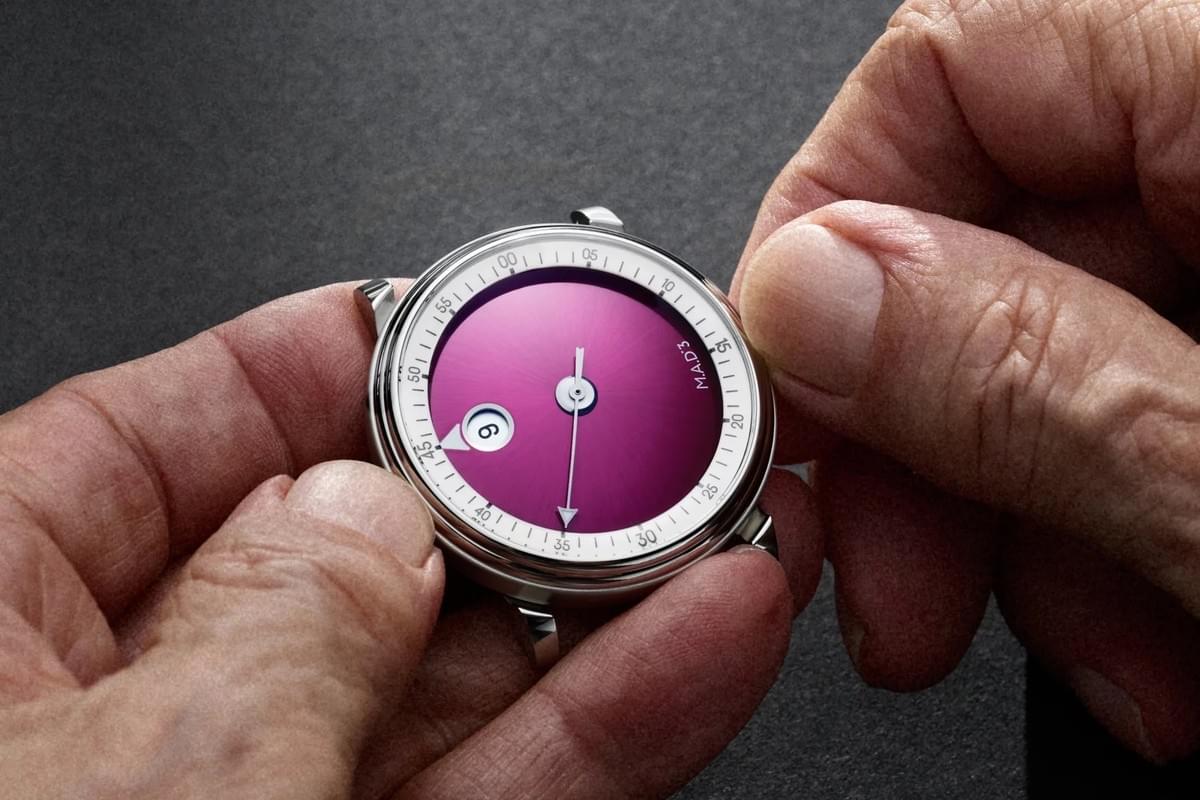
The M.A.D.3 Vincent Calabrese is unconventional, mechanically unnecessary and almost defiantly strange. It displays time in a way nobody actually needs, using considerable mechanical ingenuity to solve a problem that, in practical terms, does not exist. That might sound like criticism, but it is quite the opposite. Perhaps mechanical watchmaking has spent enough time trying to justify its existence through utility. The M.A.D.3 becomes interesting precisely when we stop asking whether we need it and start asking why someone wanted to create it in the first place.
When Telling Time Stops Being the Point
There is an uncomfortable truth at the center of modern mechanical watchmaking: we no longer need mechanical watches to tell us the time. The battle for accuracy ended long ago. A smartphone is more precise, so is a cheap quartz watch, and your computer, car and airport terminal all know the time without requiring a beautifully decorated collection of wheels, springs and jewels. Somewhere in your kitchen, there is probably an appliance capable of reminding you that your carefully regulated Swiss mechanical watch is several seconds wrong.
And yet we continue buying mechanical watches, which tells us something important: their purpose has changed. Once a mechanical watch is liberated from the responsibility of being the most efficient instrument for measuring time, watchmaking becomes free to explore something far more interesting. Mechanics can become architecture, engineering can become theater, and a complication can exist not because anybody requires it but because somebody wondered whether it could be done. In that sense, the apparent uselessness of mechanical watchmaking is no longer its weakness. It may be one of its greatest freedoms.
The M.A.D.3 lives comfortably within that territory. Its inspiration comes from Vincent Calabrese's Baladin concept and his dissatisfaction with the abrupt nature of the traditional jumping-hour display. Calabrese wanted the transition between hours to become part of the experience itself, rather than simply an instantaneous mechanical event. The resulting concept turns the passage of time into something visible and almost theatrical. It is hardly a more efficient way to tell the time, but it is certainly a more interesting one.
Vincent Calabrese and the Value of an Idea
The name attached to this watch matters. Vincent Calabrese is not a celebrity ambassador whose signature has been added to a dial in order to manufacture a collaboration story. He belongs to the generation that helped shape what we now understand as independent watchmaking. A co-founder of the Académie Horlogère des Créateurs Indépendants, the AHCI, Calabrese also developed the mechanical architecture that would eventually become Corum's extraordinary Golden Bridge. Long before independent watchmakers became auction stars, social-media celebrities or speculative targets, he belonged to a generation of craftsmen who were willing to question how a watch was supposed to be constructed.
That distinction feels particularly relevant today because independent watchmaking itself has become fashionable. Certain names command extraordinary premiums, tiny production numbers are treated as badges of desirability, allocations become trophies and obscurity can occasionally become a luxury commodity of its own. Yet the independent spirit existed long before the hype surrounding independent watchmaking. At its best, independence has never simply meant producing fewer watches. It means having enough creative freedom to pursue an idea that a corporate committee might dismiss as unnecessary, commercially risky or simply too strange.
This is where the relationship between Calabrese and Maximilian Büsser becomes compelling. They come from different generations, but both represent a willingness to question the conventional architecture and presentation of a mechanical watch. The M.A.D.3 therefore feels less like a conventional collaboration and more like a conversation between two eras of independent thinking. One supplied an idea born from decades of mechanical experimentation; the other possessed the technical and industrial framework necessary to reinterpret it for a very different audience.
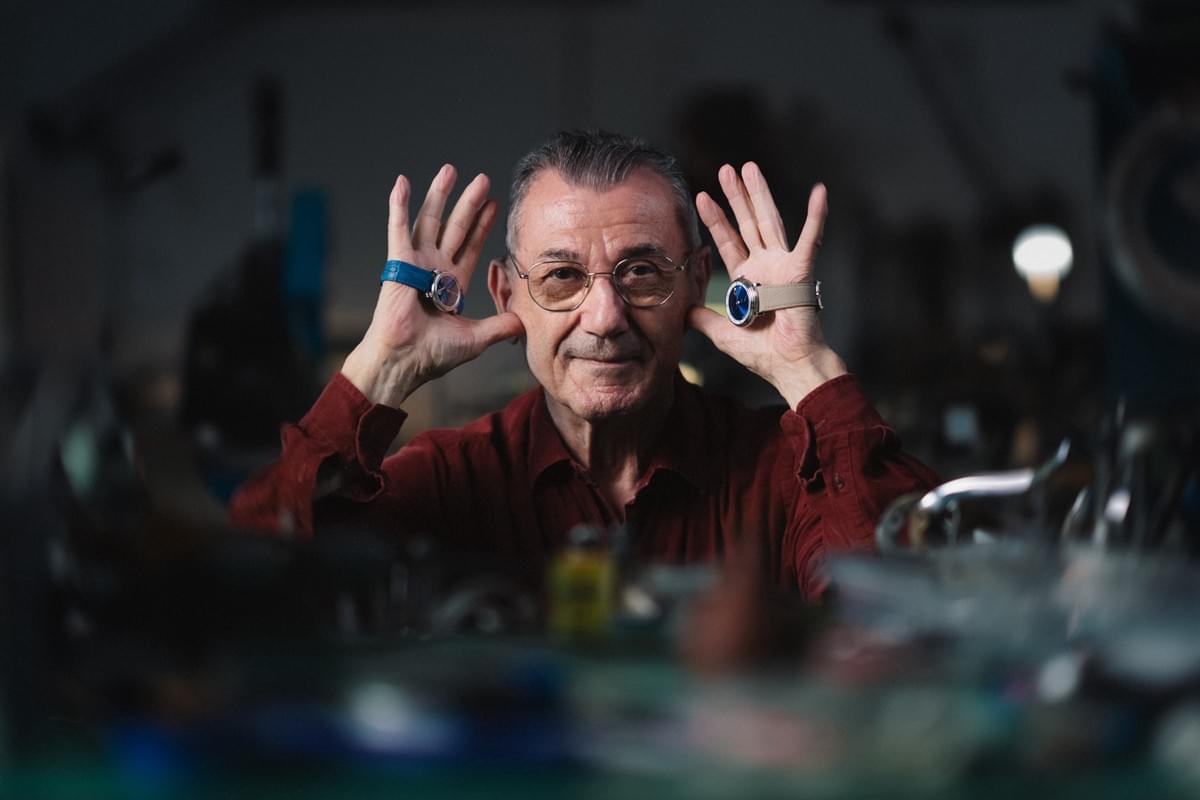
There is an important detail here. M.A.D.Editions did not simply take an old Calabrese mechanism and place it inside a contemporary case. The original constructions were highly artisanal and difficult to reproduce reliably at the volume required for this project, so MB&F's technical team redeveloped the wandering-hours module while attempting to preserve the character of Calabrese's original concept. That may actually be the most interesting technical story behind the M.A.D.3, because making mechanical creativity more accessible is not simply a matter of reducing the price. Sometimes it requires reconsidering how an idea can be manufactured at all.
CHF 2,900 and the Meaning of Accessible
The public M.A.D.3 Blue is priced at CHF 2,900 before taxes, with approximately 1,500 examples being allocated through the public raffle. That price has inevitably become part of the conversation surrounding the watch, and it should. But we should also resist one of the stranger habits of modern watch collecting: describing several thousand francs as though it were objectively inexpensive. Spend enough time around haute horlogerie and eventually CHF 2,900 begins to sound “accessible” simply because something else costs CHF 100,000. Several thousand francs remain several thousand francs.
That reality does not weaken the case for the M.A.D.3; it actually makes the comparison more useful. The interesting question is not whether CHF 2,900 is a lot of money. It is. The question is what kind of mechanical creativity CHF 2,900 normally buys in today's market. We have become accustomed to seeing truly unconventional mechanical ideas accompanied by five- and six-figure prices. Extraordinary finishing costs money, handcraft costs money, tiny production runs cost money and developing movements from scratch certainly costs money. All of that is understandable. What is less convincing is the assumption that interesting horology must necessarily be extraordinarily expensive horology.
The M.A.D.3 does not democratize haute horlogerie, and describing it that way would be an exaggeration. It does not somehow give the buyer a CHF 100,000 watch for CHF 2,900 either. What it offers is subtler and perhaps more valuable: access to a certain kind of independent thinking. The owner is buying an unusual mechanical idea rather than simply a familiar design executed at another price point. That distinction is important because, at its most compelling, watchmaking has always been driven as much by ideas as by finishing.
The In-House Obsession
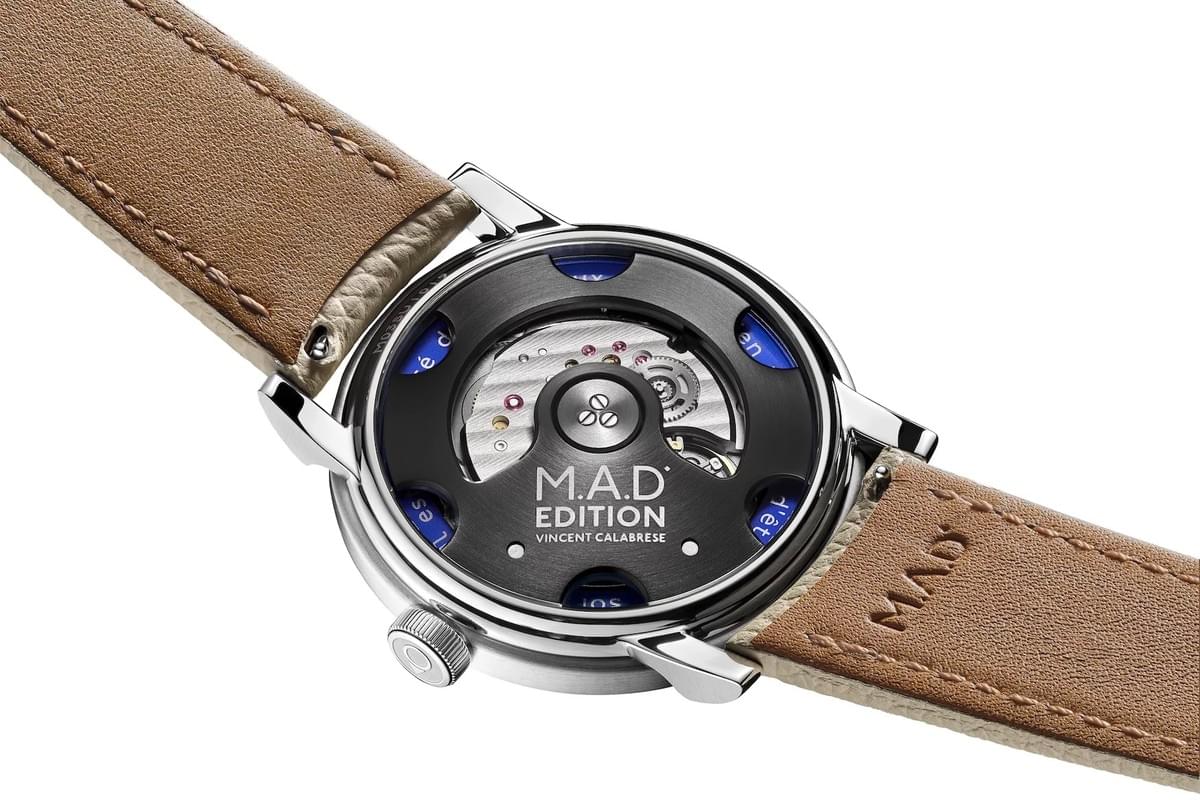
Inside the M.A.D.3 sits a Swiss-made La Joux-Perret G111 base calibre working with the module developed for its unusual display. The movement runs at 4Hz, contains 24 jewels and provides approximately 55 hours of power reserve. The stainless-steel case measures 40mm in diameter, 43.7mm lug-to-lug and 12.7mm thick, with sapphire crystals front and back and 30 meters of water resistance. These are perfectly respectable specifications, although nobody is likely to purchase the M.A.D.3 because its technical sheet defeated every competitor in a spreadsheet.
The use of the G111 also raises another interesting question. Modern enthusiasts have been trained to place enormous importance on the words in-house and manufacture. There are good reasons for that. Designing and producing a movement internally can represent tremendous investment, expertise and technical independence. But somewhere along the way, provenance occasionally began to matter more than the actual idea. A beautifully manufactured conventional three-hand calibre is not automatically more intellectually interesting simply because every component was produced under the same roof.
Perhaps the more useful question is not always who manufactured the base movement, but what the watchmaker chose to do with it. In the M.A.D.3, an established Swiss calibre provides the foundation upon which an unconventional display can exist at a price far below what an entirely bespoke movement would probably require. That does not transform the G111 into haute horlogerie, nor does it need to. If using a reliable industrial foundation allows an eccentric mechanical concept to reach significantly more enthusiasts, then practicality and creativity may have found a sensible compromise.
There is something refreshingly straightforward about that approach. Watch enthusiasts sometimes become so obsessed with the purity of manufacture that we forget one of the fundamental pleasures of horology: ingenuity. The person who invents a clever solution using existing tools may be doing something considerably more interesting than the person who manufactures every tool himself only to arrive at a familiar result.
The Strange Business of Scarcity
Having CHF 2,900, however, does not automatically mean you can buy the Blue M.A.D.3. You first have to obtain the opportunity to purchase one. M.A.D.Editions is allocating roughly 1,500 pieces through a raffle, with one entry per person and the selection conducted randomly. The company presents this approach as a fairer alternative to queues, product drops and indefinite waiting lists, and there is a reasonable argument in its favor. When demand exceeds production, some method of allocation becomes unavoidable.
A transparent random draw may indeed be more democratic than asking customers to cultivate boutique relationships, build purchase histories or buy several watches they do not want in the hope of eventually being offered the one they do. M.A.D.Editions should therefore not be criticized simply for having fewer watches than prospective buyers. Genuine production limitations exist, particularly when unusual mechanical components are involved.
The raffle nevertheless provides an opportunity to examine something much larger than M.A.D.Editions. Modern watch culture has reached a peculiar moment in which being allowed to spend our own money has somehow become part of the luxury experience. Waiting lists, allocations, applications, lotteries, purchase histories and private-client relationships increasingly transform the act of purchasing certain watches into something resembling admission to a club. Scarcity can be entirely legitimate, but scarcity can also become theater, and the industry has learned that the inability to obtain an object can sometimes make consumers desire it even more.
To M.A.D.Editions' credit, its approach appears relatively transparent. There is a defined period to participate, selection is random and nobody needs to convince a salesperson that they are sufficiently worthy to become a customer. Perhaps the raffle is not the problem at all. Perhaps it simply holds up a mirror to an industry in which access itself has become part of the product.
A Watch That Refuses to Be Rational
If the M.A.D.3 is judged exclusively by conventional specifications, plenty of rational alternatives exist for CHF 2,900. Buyers can find watches offering greater water resistance, more familiar movements, established histories and considerably greater versatility. Thirty meters of water resistance is hardly impressive, and the M.A.D.3 is unlikely to be the only watch anyone needs. Those observations matter because value matters. But value and specifications are not synonyms.
What the M.A.D.3 offers is considerably harder to place in a comparison chart: curiosity. You look at it and need a moment to understand what you are seeing. Then you want to understand how it works. That may lead you to Calabrese, which may lead you to the AHCI, the Golden Bridge and eventually an entire branch of independent watchmaking that you had never explored before. Suddenly the watch has accomplished something more interesting than simply telling you the time. It has sent you somewhere.
That quality matters because one of the dangers facing modern luxury watchmaking is not simply that watches are becoming expensive. Expensive watches have always existed. The greater danger is that watches become predictable: another blue dial, another integrated bracelet, another anniversary edition, another historically inspired reissue accompanied by an elaborate narrative explaining why a slightly different shade of bezel represents a major event. There is nothing inherently wrong with refinement, and some of the greatest watches ever made have evolved incrementally. But an industry devoted entirely to protecting existing icons eventually risks becoming a museum of itself.
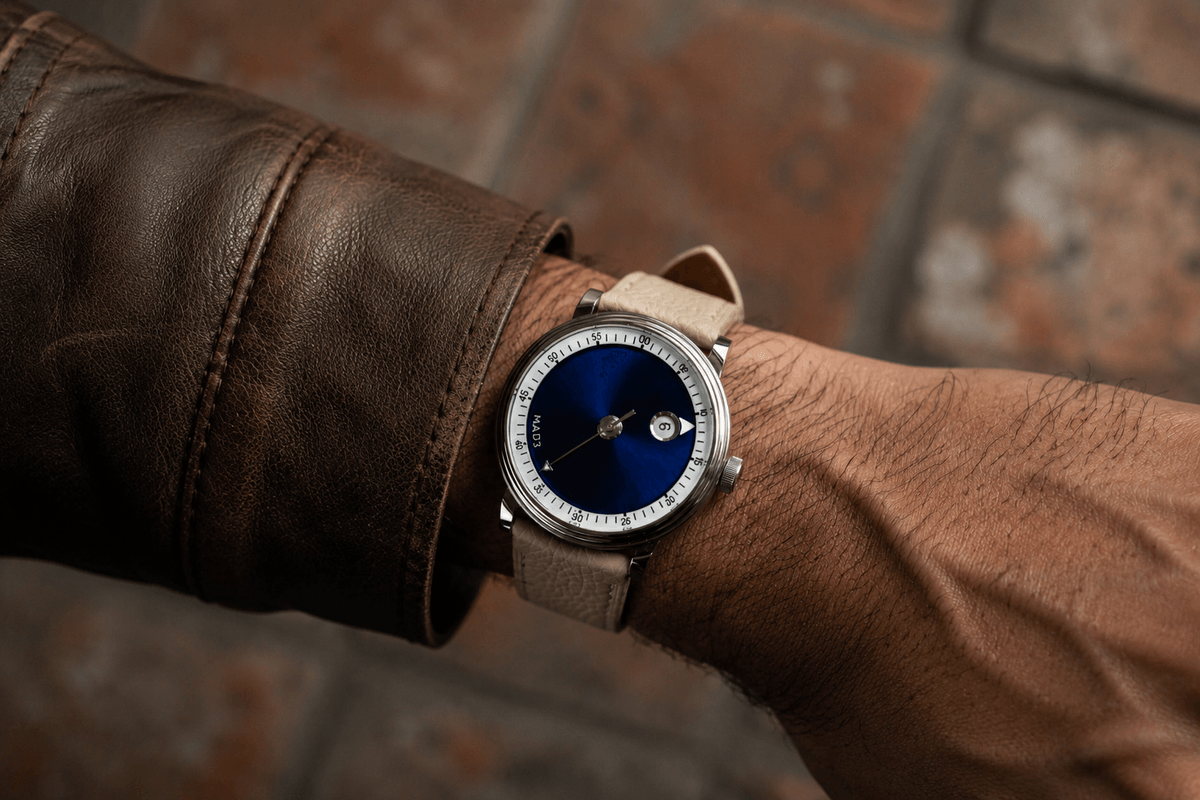
The M.A.D.3 does not suffer from that problem. You may find it beautiful, ridiculous or even ugly, but indifference is difficult. There is personality in the object because there is an identifiable idea behind it. In a market increasingly skilled at manufacturing desirability, creating genuine curiosity may be a more impressive achievement.
Perhaps Watchmaking Should Be a Little Pointless
The M.A.D.3 does not solve a problem, and that may be its greatest virtue. Mechanical watchmaking no longer has to defeat quartz or the smartphone, nor does it need to explain why an elaborate collection of springs, wheels, jewels and levers should exist when a microscopic electronic oscillator can measure time more accurately for a fraction of the cost. That battle ended long ago, and mechanical watches survived because their meaning migrated somewhere else.
Today we experience them as objects of engineering, history, craftsmanship, design and human ingenuity. Their inefficiency became part of their charm and their limitations became personality. Once we accept that, there is nothing absurd about reconsidering even the familiar act of watching one hour become the next. In fact, the willingness to complicate something unnecessarily may be one of the purest expressions of mechanical watchmaking left.
Vincent Calabrese spent decades approaching watches from unconventional directions. Max Büsser built much of his career around the belief that mechanical watchmaking still has unexplored territory. The M.A.D.3 brings those philosophies together without pretending to be something it is not. It is not haute horlogerie disguised as a CHF 2,900 watch. It is not inexpensive, it is not perfect, and its specifications will not win every comparison. What it offers instead is access to an idea, and that is considerably harder to manufacture than another attractive dial.
Perhaps that is the lesson hidden beneath all the attention surrounding this release. Independent watchmaking does not have to mean unobtainable watchmaking, an existing base movement does not automatically mean an absence of creativity, and the purpose of a mechanical watch in 2026 may have very little to do with telling us the time as efficiently as possible. Perhaps we already own enough efficient objects. Watches can be strange. They can confuse us, amuse us, frustrate us and occasionally send us searching for the story of an 82-year-old watchmaker who spent much of his career refusing to follow the road everyone else was taking.
The excitement surrounding the M.A.D.3 will eventually move on, as excitement surrounding new releases always does. Another watch will appear, social media will find its next obsession and today's object of fascination will become yesterday's launch. That is the nature of hype. But the mechanical idea behind the M.A.D.3 existed long before this week's attention and may remain interesting long after it disappears. Hype has a remarkably short memory. Good ideas tend to last longer.
Perhaps that is why the M.A.D.3 has no business being this interesting. And yet, somehow, it is.
— Mauricio Venegas
Founder & Editor, RAW TIME